
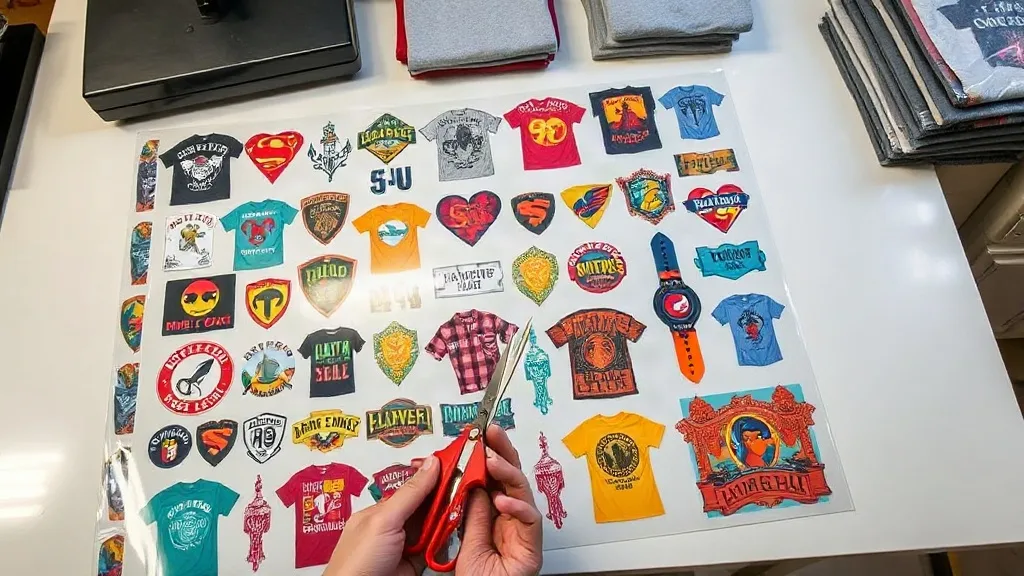
If you run a small apparel decorating shop, you already know the squeeze: customers want small runs, fast turnaround, and low prices, but your costs keep climbing. That is where a smart DTF Gangsheet strategy can change the math. Instead of ordering individual transfers, you arrange multiple designs on a single sheet, send it to a printer, and press them as needed. The result is less waste, lower per-unit cost, and a workflow that actually fits the way modern shops operate.
This guide is for buyers, not printers. Whether you are a one-person operation or managing a growing team, you will learn how to order gangsheets that save money without sacrificing quality.
What Exactly Is a DTF Gangsheet?
A DTF Gangsheet is a large-format transfer film printed with multiple designs, typically arranged to maximize the use of space. You (or your supplier) lay out artwork on a canvas that might be 22 inches wide by 12, 24, or even 60 inches long. The printer then produces the sheet in one pass, and you cut out each design as needed.
The concept is similar to gang printing in offset lithography, where multiple jobs are combined on one press sheet to reduce setup and waste. In DTF, the savings come from film, ink, and powder, plus the time saved by not handling each design separately.
Most suppliers price gangsheets by the square inch or by the running meter, with a minimum order. The key is to fill the sheet efficiently so that your cost per design drops.
Why Buyers Need to Think Like Layout Designers
When you order a gangsheet, you are not just buying transfers; you are buying square footage. Every empty space on the sheet is money you are leaving on the table. That is why smart buyers spend a few minutes planning the layout before hitting the order button.
Start with a realistic inventory of your jobs
Before you open your design software, list the jobs you have in the queue for the next two to four weeks. Include repeat designs that you know will sell, plus any new ones you want to test. Group them by size and color complexity.
For example, if you have ten orders for a small left-chest logo and five orders for a large back print, you can nest the small logos in the gaps around the large ones. That is the essence of gangsheet efficiency.
Use nesting tools or templates
Most DTF suppliers provide a template file with the sheet dimensions. You can drop your designs into the template and move them around to minimize gaps. Some suppliers also offer automatic nesting tools that arrange your artwork for you, but manual nesting often yields better results for mixed-size jobs.
A simple trick: rotate designs to fill awkward spaces. A 3-inch wide logo can fit vertically in a narrow column between larger prints.
How to Choose a DTF Gangsheet Supplier
Not all gangsheet providers are created equal. The quality of the film, the ink, and the powder adhesive all affect how the transfer performs on different fabrics. As a buyer, you should evaluate suppliers on these criteria:
- Film quality: Cheap film can curl, wrinkle, or leave residue. Look for suppliers that use double-sided matte film or high-release film for easy peeling.
- Ink and powder: The ink should be vibrant and opaque, especially on dark garments. The powder should be fine and evenly applied to avoid blotchy adhesion.
- Color accuracy: Ask for a sample print of a color-critical design. A good supplier will provide a physical sample or a digital proof with color profiles.
- Turnaround time: If you offer rush services, you need a supplier who can print and ship quickly. Ask about their standard production time and expedited options.
- Pricing structure: Compare cost per square inch, minimum order quantities, and shipping fees. Sometimes a slightly higher per-inch rate with free shipping is cheaper overall.
Do not be afraid to order from two suppliers initially and compare. The difference in quality can be significant, and your customers will notice.
Maximizing Value: Layout Strategies That Save Money
Once you have a supplier, the real savings come from how you fill each sheet. Here are proven tactics from shops that order gangsheets weekly.
Group by fabric and color
If you are printing for both light and dark garments, you might need different underbase settings. Some suppliers allow you to specify white ink underbase per design, but it is simpler to group designs that require similar settings. For example, put all dark-garment designs on one sheet with a white underbase, and all light-garment designs on another without.
Nest small items in the margins
Most gangsheet templates have a small margin around the edge. You can often fit small designs like sleeve prints or pocket logos in these areas. Just be sure to leave enough room for cutting.
Plan for repeats
If you know a design sells steadily, add multiple copies to the sheet. The per-unit cost drops as you fill the sheet, and you will have inventory ready for quick turnaround.
Use a standard size for common jobs
Many shops standardize on a 22x24-inch sheet for small jobs and a 22x60-inch sheet for larger runs. Having a standard size simplifies layout and ordering.
Common Mistakes to Avoid When Ordering Gangsheets
Even experienced buyers slip up. Watch out for these pitfalls:
- Overfilling the sheet: Cramming designs too close together can make cutting difficult and increase the risk of damaging transfers. Leave at least 0.25 inches between designs.
- Ignoring the grain direction: DTF film has a slight grain, and designs should be oriented consistently. Rotating a design 90 degrees might be fine, but rotating 180 degrees can affect peel performance.
- Forgetting about color profiles: If your supplier uses a different color profile, your bright red might come out orange. Always request a proof for critical colors.
- Not accounting for cutting: If you plan to cut with a vinyl cutter, leave registration marks. If cutting by hand, allow extra space for scissors.
How Gangsheets Fit Into a Lean Production Workflow
Shops that adopt gangsheets often find they can reduce inventory of pre-printed transfers and instead print on demand. This is especially useful for businesses that offer many design variations or personalized products.
For example, a shop that sells custom team jerseys can order a gangsheet with all the numbers and names for a week's orders. They press only what they need, reducing dead stock.
Additionally, gangsheets allow you to test new designs without committing to a large run. You can add one or two copies of a new design to a sheet and see how it sells.
Frequently Asked Questions
What is the minimum order for a DTF Gangsheet?
Minimums vary by supplier. Some accept sheets as small as 22x12 inches, while others require a full 22x60-inch sheet. For small shops, finding a supplier with low minimums is key.
Can I mix different designs on one gangsheet?
Yes, that is the whole point. You can combine any number of designs as long as they fit on the sheet and meet the supplier's file requirements.
How do I calculate the cost per transfer?
Divide the total sheet cost by the number of designs on the sheet. For example, if a 22x60-inch sheet costs $30 and holds 30 designs, your cost per transfer is $1.00 before shipping.
What file format should I use for gangsheet artwork?
Most suppliers require PNG files with transparent backgrounds at 300 DPI. Some accept PDF or AI files. Always check the supplier's guidelines.
Can I reuse a gangsheet layout for future orders?
Absolutely. Save your layout templates so you can quickly reorder the same arrangement. This is a huge time-saver for repeat jobs.
Ordering gangsheets is not just a purchasing decision; it is a production strategy. By thinking in terms of square inches and workflow, you can turn a simple transfer order into a competitive advantage.