
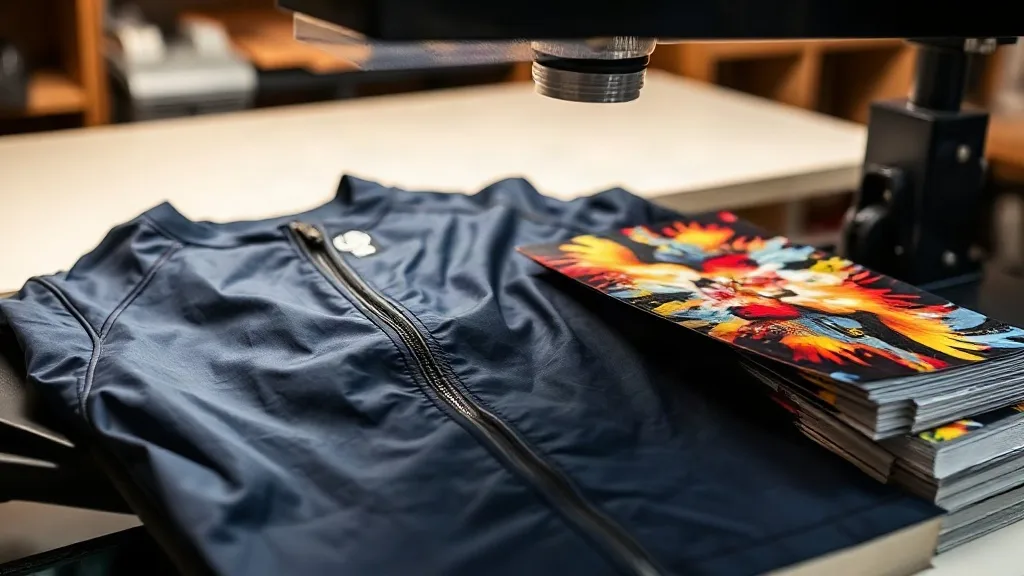
Nylon jackets have a reputation in the print shop. They look great on a hanger, they sell fast in fall and spring collections, and they can turn a routine dtf transfers job into a head-scratcher. The fabric is slick, heat-sensitive, and often coated with a water-repellent finish that fights every adhesive on the market. Press too hot and the shell glazes; press too cool and the transfer lifts at the first wash. This guide walks through the practical steps for getting reliable, good-looking prints on nylon shells without wrecking expensive blanks.
Why Nylon Behaves Differently Under the Press
Most apparel fabrics are woven or knit from cotton, polyester, or blends that absorb a certain amount of heat and let moisture escape. Nylon is different. It is a synthetic polyamide with a low melting point relative to many other synthetics, and many jacket shells are finished with a durable water repellent (DWR) coating or a polyurethane backing. That finish is designed to bead water, and it will also bead the thermoplastic adhesive in a dtf film if you do not address it first.
There is also the matter of heat transfer through the shell. Thin nylon ripstop and taffeta heat up fast, which means the surface can reach scorch temperature in seconds while the adhesive underneath is still not fully activated. Thicker nylon shells with linings behave more like a padded surface: they need more dwell time, but the lining can trap heat and cause shrinkage or shine.
Prepping Nylon Before the Transfer Goes Down
1. Identify the coating
Before you press anything, check the care label and the hand of the fabric. If water beads and rolls off the surface, there is a DWR finish. If the inside feels rubbery or has a visible membrane, it is a coated or laminated shell. Both need different handling. Uncoated nylon taffeta is the easiest to work with; coated shells need a pre-press step to release surface tension.
2. Pre-press to release the finish
A short pre-press at a moderate temperature helps drive off surface moisture and slightly relaxes the DWR layer. Set the press to around 280 to 300°F (138 to 149°C) with light pressure, and press the garment for three to five seconds. Do not overdo it. The goal is to prep the surface, not to bake the finish into the fibers.
3. Use a pressing pillow or barrier sheet
Nylon shells can develop a shiny, glazed look wherever the upper platen touches them directly. A pressing pillow under the garment lifts seams and zippers away from the plate, and a barrier sheet (a Teflon sheet or a piece of clean kraft paper) distributes heat more evenly. This is especially important on jackets with chest pockets, storm flaps, or heavy zipper pulls that can create pressure points.
Heat Press Settings That Actually Work on Nylon
There is no single universal setting, but a reliable starting point for most nylon shells is 285 to 310°F (140 to 154°C) for 10 to 12 seconds at medium pressure. That is cooler than the 320 to 340°F range many shops use on cotton, and it is intentional. Nylon scorches and glazes quickly, and a slightly longer dwell at a lower temperature gives the adhesive time to flow without risking the shell.
- Temperature: 285 to 310°F, adjusted down for thin ripstop and up slightly for heavy shells.
- Time: 10 to 12 seconds for the main press, plus a 3 to 5 second pre-press.
- Pressure: Medium. Too much pressure pushes adhesive into the weave and causes a rough hand; too little leaves the film sitting on top.
- Peel: Warm peel for most nylon films. Cold peel can snap the adhesive before it has bonded to the slick surface.
Run a test press on an inside hem or a scrap piece of the same shell before committing to a full run. Every nylon supplier finishes fabric differently, and a ten-second test saves a lot of rework.
Adhesion Problems and How to Fix Them
Peeling at the edges after wash
Edge lift on nylon almost always comes back to inadequate heat or a contaminated surface. Wipe the print area with a lint-free cloth and a small amount of isopropyl alcohol, let it flash off completely, then pre-press again. If the edges still lift, increase dwell time by two seconds rather than raising temperature.
Color shift or dulling
Nylon can cause certain pigments to shift, especially whites and light pastels. A lower press temperature and a shorter dwell help, but the bigger factor is the film itself. Ask your transfer supplier whether their film is rated for coated synthetics. Not all dtf transfers are formulated for low-surface-energy fabrics, and a film designed for cotton will struggle on a DWR shell.
Glazing and shine marks
Shine marks are heat damage, not adhesive failure. Drop the temperature by 10 to 15°F, add a barrier sheet, and reduce pressure slightly. If the shell already has a shine mark, a light steam pass from a hand iron held an inch above the surface can sometimes relax it, but prevention is far easier than repair.
Finishing and Wash Durability
Once the transfer is down, give it a full cool-down before folding or bagging. Nylon holds heat, and folding a warm jacket can press creases into the print that become permanent. For wash durability, advise customers to turn the jacket inside out, use cold water, and skip the dryer. A nylon shell with a properly applied transfer will usually outlast the garment's zipper, but heat and harsh detergent are the two things that shorten its life.
If you are running a batch of jackets for a team, a brand, or a retail drop, press a sample and run it through a home wash cycle before you commit to the full order. That single test tells you more about adhesion than any spec sheet.
Frequently Asked Questions
Can you put DTF transfers on a nylon jacket with a water-repellent coating?
Yes, but the coating has to be managed. Pre-press the surface, wipe with isopropyl alcohol, and use a film rated for low-surface-energy fabrics. Without those steps, the adhesive will sit on top of the DWR finish instead of bonding to the nylon.
What temperature should I use for DTF on nylon?
Start at 285 to 310°F (140 to 154°C) for 10 to 12 seconds at medium pressure. Thin ripstop needs the lower end of that range; heavier shells can handle the upper end. Always test on a hidden area first.
Why does my DTF print look shiny or glazed on nylon?
That is heat damage to the shell, not the transfer. Lower the temperature, add a barrier sheet or pressing pillow, and reduce pressure. Nylon glazes quickly, so small adjustments matter more than on cotton.
Do DTF transfers survive washing on nylon jackets?
Properly applied transfers hold up well through repeated cold washes. Turn the garment inside out, avoid hot water and the dryer, and the print should stay intact for the life of the jacket.
Can I use the same DTF film for nylon and cotton?
Sometimes, but not always. Films formulated for cotton and polyester blends may not bond reliably to coated nylon. Check with your supplier and keep a separate roll or sheet spec for synthetic shells if you print them regularly.