
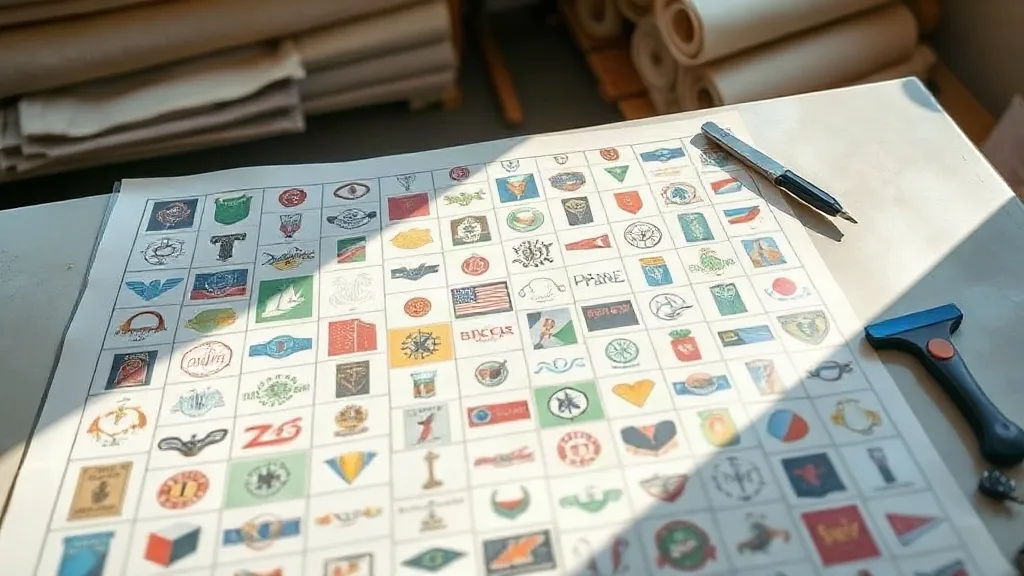
Most small apparel shops price a job by eyeballing the transfer cost, adding a round number for labor, and hoping the invoice clears a profit. That works until a customer orders eighteen shirts in six different sizes with three separate designs, and suddenly the numbers stop making sense. The problem usually is not your press time or your blanks. It is how you account for the transfer sheet itself. A DTF Gangsheet changes that math because you are no longer paying for one design per sheet. You are paying for area, and area is something you can plan around.
What a gangsheet actually is, and why it matters for pricing
A gangsheet is a single large transfer film that holds many individual designs, nested together to use as much of the printable area as possible. Instead of ordering ten separate A4 transfers for ten shirts, you order one sheet with ten designs laid out across it. The printer charges by the sheet size or by the linear length of film, not by the number of designs.
That single fact is the whole reason gangsheets are useful for small-batch work. When your cost is tied to area rather than quantity, a shop that runs twenty shirts a week can buy transfers at a rate that used to be reserved for shops running two hundred. But the pricing benefit only shows up if you translate it into your quotes correctly. Plenty of shops buy gangsheets, save money on the transfer, and then still quote jobs as if they were buying individual sheets. The savings never reach the invoice.
The three costs that decide your per-piece transfer price
Before you can price a small batch, you need to know what one transfer actually costs you. With a gangsheet, that number comes from three inputs.
1. Sheet area and how well you fill it
If you order a sheet that is 22 inches by 60 inches and only place designs across half of it, you paid for empty film. The per-design cost doubles compared to a tightly nested sheet. This is the single biggest lever in gangsheet economics, and it is entirely under your control at the layout stage. Rotate designs, interlock odd shapes, and keep a consistent gutter between them so the cutter has room to work.
2. Design size, not design count
A left-chest logo and a full back print do not cost the same, even on the same sheet. A 3-inch chest logo might take up a tenth of the area of a 12-inch back print. When you quote a job, price by the total printed area the customer is asking for, not by the number of shirts. A customer ordering ten small chest prints is not the same job as one ordering ten large back prints, and your quote should reflect that.
3. Waste and reprints
Every shop has a waste rate. A design that presses badly, a shirt that gets misaligned, a size mix-up. On individual sheets, waste is easy to see because you lose a whole sheet. On a gangsheet, a single bad press might only cost you one design out of thirty. That is a real advantage, but only if you build a modest waste allowance into your pricing rather than pretending it will not happen. A 3 to 5 percent allowance on transfer cost is a reasonable starting point for most small shops.
A worked example: pricing a 24-shirt order
Suppose a local gym orders 24 shirts: 12 small chest logos and 12 full back prints. Here is how the math might look with a gangsheet approach.
- Chest logos: 12 designs at roughly 3 by 3 inches each. Nested tightly, they take up a modest strip of film.
- Back prints: 12 designs at roughly 11 by 12 inches each. These dominate the layout.
- Total printable area needed: around 1,600 square inches, plus gutters.
- Film cost: if your supplier charges around 4 to 6 cents per square inch for a gangsheet, the transfer cost lands somewhere between 65 and 100 dollars for the whole order.
- Per-shirt transfer cost: roughly 3 to 4 dollars, blended across the mixed sizes.
Now compare that to ordering individual sheets for each design. Even at a favorable per-sheet rate, 24 separate sheets usually push the per-shirt transfer cost higher, and the gap widens as designs get smaller. The gangsheet does not just save money. It makes the cost predictable, which is what you need to quote confidently.
From there, add your blank cost, your press and labor time, and your target margin. If a blank heavyweight tee runs you 6 dollars, transfer cost is 3.50, and you allow 4 dollars for labor and overhead, your cost is 13.50 per shirt. A 50 percent margin puts the price near 27 dollars. That is a quote you can defend, because you know where every dollar came from.
Where small shops lose money without noticing
The savings from a DTF Gangsheet are real, but they leak out in a few predictable places.
Quoting by shirt count instead of design area
This is the most common error. A customer asks for 20 shirts, you quote a flat per-shirt price, and then half the order turns out to be oversized back prints. Your transfer cost jumps, your margin disappears, and you are stuck honoring a quote that was never accurate. Price the design, then multiply by quantity.
Forgetting size runs
A size run from small to 3XL means more shirt sizes to manage and often more setup. If your pricing ignores that complexity, you absorb it. A small upcharge for extended sizes is normal and customers expect it.
Not charging for layout time
Nesting designs on a gangsheet takes time, especially when you are trying to fill the film efficiently. That is skilled work. Build a modest layout fee into small orders, or set a minimum order value that covers it.
Treating reprints as free
If a transfer fails because of a press error on your end, you eat the cost. If it fails because the customer approved a design that does not press well on their chosen fabric, that is a conversation worth having before production. Set expectations up front about fabric compatibility and design resolution.
How to make gangsheets work for very small orders
Small batches are where gangsheets shine, but they need a little planning. If a customer orders only six shirts, you may not fill a full sheet on your own. Two options work well.
- Batch with other jobs. If you run several small orders in the same week, combine designs from multiple customers onto one sheet. Many gangsheet suppliers support this, and it drops the per-design cost for everyone.
- Keep a standing layout. If you sell your own brand of blanks with recurring designs, keep a reusable gangsheet layout so you are not rebuilding the file every time.
Either way, the goal is the same: fill the film. Empty film is the most expensive thing on your sheet.
Matching blanks to your pricing strategy
Your transfer cost only makes sense in relation to the garment it goes on. A 3 dollar transfer on a 4 dollar lightweight blank gives you a very different margin profile than the same transfer on a 9 dollar heavyweight tee. For premium blanks, the transfer cost is a smaller percentage of total cost, which gives you more room to absorb layout time and waste. For budget blanks, every cent of transfer cost matters, and tight nesting becomes essential.
This is why it pays to standardize your blank lineup. If you know your go-to heavyweight tee costs a predictable amount and presses reliably, you can build pricing models around it instead of recalculating every order. The fewer variables in your cost structure, the easier it is to quote quickly and accurately.
Frequently asked questions
Is a DTF gangsheet cheaper than ordering individual transfers?
Usually yes, especially when designs are small or when you can combine multiple orders onto one sheet. The savings depend on how well you fill the printable area. A half-empty sheet can cost more per design than individual transfers, so layout efficiency matters.
How many designs fit on a typical gangsheet?
It depends entirely on design size and sheet dimensions. A sheet might hold forty small chest logos or six large back prints. The number that matters is total printed area, not design count.
Can I mix different designs and sizes on one gangsheet?
Yes, and that is one of the main reasons shops use them. Mixing a size run or several designs on one sheet is normal. Just leave enough gutter between designs for clean cutting and pressing.
How should I price a small batch if I am new to gangsheets?
Start by calculating your actual transfer cost per design based on sheet area and fill rate. Add blank cost, labor, a small waste allowance, and your target margin. Quote by design area and quantity, not by a flat per-shirt number.
Do gangsheets work for one-off custom orders?
They can, but a single small design on a large sheet is wasteful. For true one-offs, either batch the order with other jobs or accept that the per-design cost will be higher. It is still often competitive with other decoration methods for small runs.